
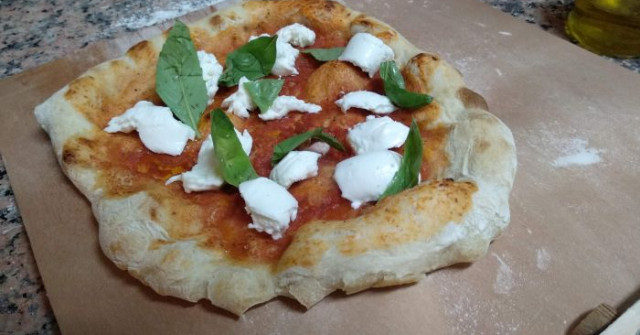
Baking stone
The baking stone absorbs the high temperature of the oven and keeps it even when the oven door is opened. The high temperature is needed so the heat reaches the center of the bake as quickly as possible, before the crust sets. The high heat together with the hot air in the oven allows a strong rise from the bottom of the bake upward, creating a crispy crust.
Place the baking stone in a cold oven, and only then heat the oven.
Remove the baking stone from the oven only after both the oven and the stone have cooled.
Putting the stone into a hot oven or taking it out while it is hot may crack the stone. In other words, a rapid change from hot to cold, or the reverse, may crack the stone.
The baking stone takes a long time to heat up (about an hour) and a long time to cool down (about two hours).
To load and unload the pizza or bread you need a long, large peel, which can be bought in stores or made at home. Do not tap on the baking stone when sliding in the pizza, as this may crack it over time.
To remove the pizza, slide the peel under the pizza; you can use another long peel above the pizza to stabilize it on the peel.
Roll out the dough on floured baking paper, slide the dough with the paper onto the peel, and then slide it off the paper onto the stone in the oven.
The baking time for pizza is between five and eight minutes, so keep an eye on it.
Do not clean the stone with various cleaning agents, as the stone absorbs odors and flavors.
The right way to clean the stone is dry, using a putty knife or a coarse brush to remove hard pieces. Or use a damp sponge and baking soda, then rinse with water and dry completely before using it again.
The Recipeat app
All the community's recipes in your pocket. Available now on Android.
Get it on Google PlayWant an email when a new recipe is posted?
About us
Recipeat is a social recipe site. It holds the recipes we all share, and every recipe you add goes straight into your own recipe book.
Read moreMeasurement converter
|
Ingredient |
Cup |
Tablespoon |
Teaspoon |
|---|---|---|---|
|
Powdered sugar |
120 g |
8 g |
3 g |
|
Chopped nuts |
100 g |
6 g |
|
|
Finely ground nuts |
85 g |
|
|
|
Rice |
200 g |
|
|
|
Honey |
360 g |
22 g |
7 g |
|
Butter Melted butter |
240 g |
15 g 14 g |
|
|
Peanut butter |
250 g |
|
|
|
Raw tahini |
240 g |
|
|
|
Salt |
250 g |
20 g |
6 g |
|
Maple syrup |
240 g |
|
|
|
Liquids Water, orange juice, milk |
240 g 240 ml |
15 g 15 ml |
|
|
Nutella |
280 g |
|
|
|
White sugar |
200 g |
12 g |
4 g |
|
Packed brown sugar |
240 g |
15 g |
5 g |
|
Semolina |
200 g |
10 g |
|
|
Can of condensed milk |
398 g |
|
|
|
Can of coconut milk |
400 g |
|
|
|
Cookie crumbs |
110 g |
|
|
|
Dry breadcrumbs |
125 g |
|
|
|
Chopped dried fruit |
150 g |
|
|
|
Ground poppy seeds |
70 g |
|
|
|
Coconut |
100 g |
|
|
|
Cornstarch |
140 g |
10 g |
|
|
White flour |
140 g |
10 g |
|
|
Whole wheat flour |
125 g |
8 g |
|
|
Cocoa |
140 g |
10 g |
|
|
Jam |
330 g |
|
|
|
Dulce de leche |
400 g |
|
|
|
Chocolate chips |
200 g |
|
|
|
Oats |
100 g |
|
|
|
Oil |
200 g |
|
|
|
Coconut oil solid melted |
|
14 g 14 g |
|
|
Oven temperatures Description |
Gas mark |
Celsius |
Fahrenheit |
|
Very low heat |
105 |
220 |
|
|
120 |
250 |
||
|
Low heat |
1 |
135 |
275 |
|
2 |
150 |
300 |
|
|
Medium-low |
3 |
160 |
320 |
|
Medium |
3 |
170 |
340 |
|
Medium |
4 |
180 |
355 |
|
5 |
190 |
375 |
|
|
Medium-high |
6 |
200 |
390 |
|
High |
7 |
220 |
430 |
|
8 |
230 |
445 |
|
|
Very high |
9 |
245 |
475 |
50 g fresh yeast (a "Shimrit" packet / cube) = 2 tablespoons dry
yeast. 1 tablespoon dry yeast = 10 g
To replace dry yeast with fresh yeast, multiply the amount by 3
1 g dry yeast = 3 g fresh yeast
Packet = 10 g
Tablespoon = 8 g
Teaspoon = 3 g
Gelatin packet = 14 g
Tablespoon of gelatin = 10 g
One gelatin sheet = 4 g
Gelatin packet = 3½ gelatin sheets
To dissolve 1 g of gelatin use 5 g
Egg size 1 (L) – 65 g and over
Egg size 2 (M) – 55-60 g
Egg size 3 (S) – 50 g
Egg white – 40 g on average
Egg yolk – 20 g on average
The oil should weigh 85% of the butter's weight
100 g butter = 85 g oil
200 g butter = 170 g oil
1 cup oil = 200 g
100 ml oil = 90 g
100 g butter = 100 g applesauce
100 ml oil = 100 ml applesauce
Replacing eggs with applesauce
1 egg = 60 g applesauce
Butter stick = 120 g, ½ cup
8 oz = 1 cup = 240 ml = 16 tablespoons
4 oz = ½ cup = 120 ml = 8 tablespoons.
2 oz = ¼ cup = 60 ml = 4 tablespoons.
1 oz = 2 tablespoons = 30 ml = ⅛ cup.
½ oz = 1 tablespoon = 15 ml = 3 teaspoons.
0.16 oz = 1 teaspoon = 5 ml = ⅓ tablespoon
1 pint = 480 ml = 2 cups.
1 quart = 960 ml = 4 cups.
A small package weighs 350 g
1 cup self-rising flour = 1 cup plain flour + 1 teaspoon baking powder
1 kg self-rising flour = 1 kg plain flour + 2 packets of baking powder