
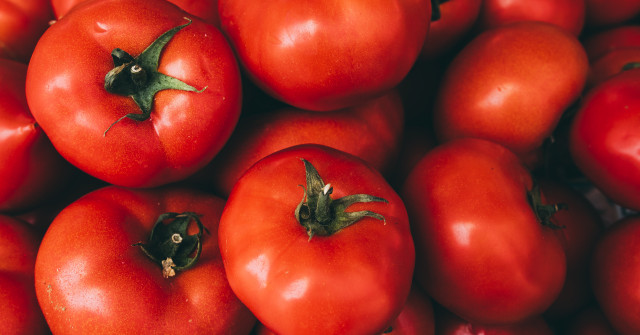
Tomato
The Italians were the first to grow tomatoes, in 1550, and they were probably the first Europeans to eat them. About 25 years later they were grown in England, Spain and central Europe as a curiosity, with little interest in them as food. In France the tomato received the name "pomme d'amour" (love apple), hence the early English and American term love apple. This led to its Hebrew name, "agvania" (עגבנייה), from the root ayin-gimel-bet, meaning passion or courtship. The one who gave it the Hebrew name was Rabbi Yechiel Michel Pinchas.
In the mid-18th century tomatoes were grown extensively as food in Italy, and to a small extent in other European countries.
There is no evidence that tomatoes were grown by white settlers before the US Declaration of Independence. Thomas Jefferson, an exceptional farmer from Virginia and also a statesman, grew tomatoes in 1781.
Tomatoes were used as food in New Orleans in 1812, under French influence. But another 20 to 25 years passed before they were grown in the northeastern part of the US.
Although the combination of pasta and tomato sauce seems eternal, the first recipe for tomato sauce in Italy dates to 1692, and it was prepared by a Spanish chef who worked at the kingdom's mission in Naples. The first recipe for pasta with tomato sauce appears only a hundred years later, in a cookbook from 1790.
The famous French chef Auguste Escoffier made tomato sauce a classic when he listed it among the five basic sauces of French cuisine.
The first varieties of cherry tomatoes were developed in the 1990s at the Faculty of Agriculture of the Hebrew University by a team led by Professors Nahum Kedar and Chaim Rabinovitch.
The smallest tomato in the world is grown in the Netherlands and is called the tomberry, with a diameter of only 1/2 cm. At the other end of the scale is the beefsteak tomato, whose diameter can reach 10 cm or more and weigh almost ½ kg per fruit. Today yellow, orange, green, striped and even purple tomatoes are also grown around the world.
The Recipeat app
All the community's recipes in your pocket. Available now on Android.
Get it on Google PlayWant an email when a new recipe is posted?
About us
Recipeat is a social recipe site. It holds the recipes we all share, and every recipe you add goes straight into your own recipe book.
Read moreMeasurement converter
|
Ingredient |
Cup |
Tablespoon |
Teaspoon |
|---|---|---|---|
|
Powdered sugar |
120 g |
8 g |
3 g |
|
Chopped nuts |
100 g |
6 g |
|
|
Finely ground nuts |
85 g |
|
|
|
Rice |
200 g |
|
|
|
Honey |
360 g |
22 g |
7 g |
|
Butter Melted butter |
240 g |
15 g 14 g |
|
|
Peanut butter |
250 g |
|
|
|
Raw tahini |
240 g |
|
|
|
Salt |
250 g |
20 g |
6 g |
|
Maple syrup |
240 g |
|
|
|
Liquids Water, orange juice, milk |
240 g 240 ml |
15 g 15 ml |
|
|
Nutella |
280 g |
|
|
|
White sugar |
200 g |
12 g |
4 g |
|
Packed brown sugar |
240 g |
15 g |
5 g |
|
Semolina |
200 g |
10 g |
|
|
Can of condensed milk |
398 g |
|
|
|
Can of coconut milk |
400 g |
|
|
|
Cookie crumbs |
110 g |
|
|
|
Dry breadcrumbs |
125 g |
|
|
|
Chopped dried fruit |
150 g |
|
|
|
Ground poppy seeds |
70 g |
|
|
|
Coconut |
100 g |
|
|
|
Cornstarch |
140 g |
10 g |
|
|
White flour |
140 g |
10 g |
|
|
Whole wheat flour |
125 g |
8 g |
|
|
Cocoa |
140 g |
10 g |
|
|
Jam |
330 g |
|
|
|
Dulce de leche |
400 g |
|
|
|
Chocolate chips |
200 g |
|
|
|
Oats |
100 g |
|
|
|
Oil |
200 g |
|
|
|
Coconut oil solid melted |
|
14 g 14 g |
|
|
Oven temperatures Description |
Gas mark |
Celsius |
Fahrenheit |
|
Very low heat |
105 |
220 |
|
|
120 |
250 |
||
|
Low heat |
1 |
135 |
275 |
|
2 |
150 |
300 |
|
|
Medium-low |
3 |
160 |
320 |
|
Medium |
3 |
170 |
340 |
|
Medium |
4 |
180 |
355 |
|
5 |
190 |
375 |
|
|
Medium-high |
6 |
200 |
390 |
|
High |
7 |
220 |
430 |
|
8 |
230 |
445 |
|
|
Very high |
9 |
245 |
475 |
50 g fresh yeast (a "Shimrit" packet / cube) = 2 tablespoons dry
yeast. 1 tablespoon dry yeast = 10 g
To replace dry yeast with fresh yeast, multiply the amount by 3
1 g dry yeast = 3 g fresh yeast
Packet = 10 g
Tablespoon = 8 g
Teaspoon = 3 g
Gelatin packet = 14 g
Tablespoon of gelatin = 10 g
One gelatin sheet = 4 g
Gelatin packet = 3½ gelatin sheets
To dissolve 1 g of gelatin use 5 g
Egg size 1 (L) – 65 g and over
Egg size 2 (M) – 55-60 g
Egg size 3 (S) – 50 g
Egg white – 40 g on average
Egg yolk – 20 g on average
The oil should weigh 85% of the butter's weight
100 g butter = 85 g oil
200 g butter = 170 g oil
1 cup oil = 200 g
100 ml oil = 90 g
100 g butter = 100 g applesauce
100 ml oil = 100 ml applesauce
Replacing eggs with applesauce
1 egg = 60 g applesauce
Butter stick = 120 g, ½ cup
8 oz = 1 cup = 240 ml = 16 tablespoons
4 oz = ½ cup = 120 ml = 8 tablespoons.
2 oz = ¼ cup = 60 ml = 4 tablespoons.
1 oz = 2 tablespoons = 30 ml = ⅛ cup.
½ oz = 1 tablespoon = 15 ml = 3 teaspoons.
0.16 oz = 1 teaspoon = 5 ml = ⅓ tablespoon
1 pint = 480 ml = 2 cups.
1 quart = 960 ml = 4 cups.
A small package weighs 350 g
1 cup self-rising flour = 1 cup plain flour + 1 teaspoon baking powder
1 kg self-rising flour = 1 kg plain flour + 2 packets of baking powder