
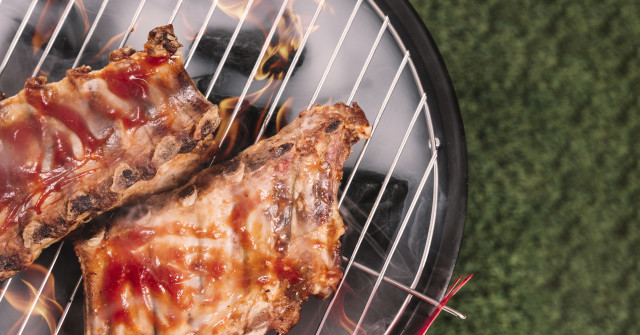
How to Make a Healthy Barbecue
Various chemical fuels release unhealthy substances that rise in the smoke and are absorbed into the meat, so it's better to use paper to light the grill.
These unhealthy substances are also created when fat from the meat drips onto the coals, burns, and rises in the smoke, which is then absorbed back into the meat. Therefore, lean meat is preferable. Lamb is the fattiest meat, so it is also not recommended.
The most recommended option – fish. They need shorter cooking times and are easier to digest.
Recommended meats – lean meats such as chicken thighs, chicken breast, sirloin steak, beef fillet, turkey skewers, and homemade hamburgers.
Not recommended – organ meats that are very rich in cholesterol and fat (liver, hearts), processed meats (hamburgers, kebabs, sausages), wings, entrecôte, asado, and ribs.
It's worth replacing a charcoal grill with an electric grill, a gas grill, or even your home oven. Electric and gas grills produce less smoke.
Be careful not to burn the meat. It's better to cook over coals rather than open flame, since cooking meat at very high heat creates unhealthy substances.
Avoid eating burnt and charred parts. They contain harmful substances.
It's better to place the meat on aluminum foil or in a pan to prevent direct contact between the meat and the flame, and to avoid scorching the meat.
Frequently turning and flipping the meat prevents the temperature inside it from rising too quickly.
Pre-cooking – you can reduce the damage from grilling over fire by pre-cooking the meat in a pan or oven and then placing it on the grill to finish cooking.
It's worth marinating the meat before grilling. Studies have found that soaking meat in beer or wine for at least two hours significantly reduces the formation of harmful substances, probably due to the antioxidants in these drinks. It's also worth adding spices such as garlic, onion, turmeric, and ginger to the marinade, which are also antioxidants.
Marinade also adds moisture to the meat, and dry cooking methods like grilling create harmful substances, so it is considered unhealthy.
Various studies have found that rubbing meat with herbs such as rosemary, thyme, sage, basil, oregano, or mint before grilling reduces the levels of harmful substances formed during grilling.
It's important to include plenty of fresh vegetables, which contain antioxidants that can offer some protection against the toxic substances formed when grilling meat.
Prefer fresh homemade vegetables seasoned with lemon and olive oil, and less mayonnaise.
Prefer homemade hummus and tahini rather than store-bought ones.
The Recipeat app
All the community's recipes in your pocket. Available now on Android.
Get it on Google PlayWant an email when a new recipe is posted?
Recently viewed recipes

About us
Recipeat is a social recipe site. It holds the recipes we all share, and every recipe you add goes straight into your own recipe book.
Read moreMeasurement converter
|
Ingredient |
Cup |
Tablespoon |
Teaspoon |
|---|---|---|---|
|
Powdered sugar |
120 g |
8 g |
3 g |
|
Chopped nuts |
100 g |
6 g |
|
|
Finely ground nuts |
85 g |
|
|
|
Rice |
200 g |
|
|
|
Honey |
360 g |
22 g |
7 g |
|
Butter Melted butter |
240 g |
15 g 14 g |
|
|
Peanut butter |
250 g |
|
|
|
Raw tahini |
240 g |
|
|
|
Salt |
250 g |
20 g |
6 g |
|
Maple syrup |
240 g |
|
|
|
Liquids Water, orange juice, milk |
240 g 240 ml |
15 g 15 ml |
|
|
Nutella |
280 g |
|
|
|
White sugar |
200 g |
12 g |
4 g |
|
Packed brown sugar |
240 g |
15 g |
5 g |
|
Semolina |
200 g |
10 g |
|
|
Can of condensed milk |
398 g |
|
|
|
Can of coconut milk |
400 g |
|
|
|
Cookie crumbs |
110 g |
|
|
|
Dry breadcrumbs |
125 g |
|
|
|
Chopped dried fruit |
150 g |
|
|
|
Ground poppy seeds |
70 g |
|
|
|
Coconut |
100 g |
|
|
|
Cornstarch |
140 g |
10 g |
|
|
White flour |
140 g |
10 g |
|
|
Whole wheat flour |
125 g |
8 g |
|
|
Cocoa |
140 g |
10 g |
|
|
Jam |
330 g |
|
|
|
Dulce de leche |
400 g |
|
|
|
Chocolate chips |
200 g |
|
|
|
Oats |
100 g |
|
|
|
Oil |
200 g |
|
|
|
Coconut oil solid melted |
|
14 g 14 g |
|
|
Oven temperatures Description |
Gas mark |
Celsius |
Fahrenheit |
|
Very low heat |
105 |
220 |
|
|
120 |
250 |
||
|
Low heat |
1 |
135 |
275 |
|
2 |
150 |
300 |
|
|
Medium-low |
3 |
160 |
320 |
|
Medium |
3 |
170 |
340 |
|
Medium |
4 |
180 |
355 |
|
5 |
190 |
375 |
|
|
Medium-high |
6 |
200 |
390 |
|
High |
7 |
220 |
430 |
|
8 |
230 |
445 |
|
|
Very high |
9 |
245 |
475 |
50 g fresh yeast (a "Shimrit" packet / cube) = 2 tablespoons dry
yeast. 1 tablespoon dry yeast = 10 g
To replace dry yeast with fresh yeast, multiply the amount by 3
1 g dry yeast = 3 g fresh yeast
Packet = 10 g
Tablespoon = 8 g
Teaspoon = 3 g
Gelatin packet = 14 g
Tablespoon of gelatin = 10 g
One gelatin sheet = 4 g
Gelatin packet = 3½ gelatin sheets
To dissolve 1 g of gelatin use 5 g
Egg size 1 (L) – 65 g and over
Egg size 2 (M) – 55-60 g
Egg size 3 (S) – 50 g
Egg white – 40 g on average
Egg yolk – 20 g on average
The oil should weigh 85% of the butter's weight
100 g butter = 85 g oil
200 g butter = 170 g oil
1 cup oil = 200 g
100 ml oil = 90 g
100 g butter = 100 g applesauce
100 ml oil = 100 ml applesauce
Replacing eggs with applesauce
1 egg = 60 g applesauce
Butter stick = 120 g, ½ cup
8 oz = 1 cup = 240 ml = 16 tablespoons
4 oz = ½ cup = 120 ml = 8 tablespoons.
2 oz = ¼ cup = 60 ml = 4 tablespoons.
1 oz = 2 tablespoons = 30 ml = ⅛ cup.
½ oz = 1 tablespoon = 15 ml = 3 teaspoons.
0.16 oz = 1 teaspoon = 5 ml = ⅓ tablespoon
1 pint = 480 ml = 2 cups.
1 quart = 960 ml = 4 cups.
A small package weighs 350 g
1 cup self-rising flour = 1 cup plain flour + 1 teaspoon baking powder
1 kg self-rising flour = 1 kg plain flour + 2 packets of baking powder